
Marketing Funnel Basics: Awareness to Purchase
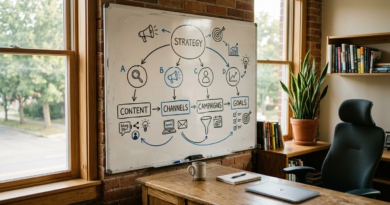
Marketing funnel basics describe the path a person takes from first hearing about you to becoming a customer. A funnel is simply a way to organise your marketing so each step has a purpose. Understanding awareness, interest, decision and purchase helps you stop guessing, fix the weakest step and spend money where it matters. This beginner-friendly guide explains each stage with examples any small business can use.
Key facts
- Stages: awareness, interest, consideration, decision, purchase, loyalty
- Goal: move people one step at a time
- Fix first: the stage where most people drop out
- Tools: content, email, offers, follow-up and reviews
What a Funnel Is and Is Not
A funnel is a model, not a machine. People do not move in straight lines, and they may skip stages or return later. The model is useful because it asks a simple question at each point: what does this person need next? A visitor who has never heard of you needs education, not a hard sell. A person ready to buy needs clarity and an easy next step. Mapping these needs shows where your marketing is strong and where it leaks.
Stage 1: Awareness
At this stage people learn that you exist. Useful tools include search-friendly articles, social posts, short videos, local listings and referrals. The goal is to attract the right people, not everyone. Make your message clear: who you help and with what. See content marketing for beginners for a starting plan.
Stage 2: Interest
Interested people want more information. Offer something valuable in exchange for an email address, such as a checklist, a short guide or a webinar. This is the moment to collect leads rather than rely on a one-time visit. Read how to get leads from your blog for examples.
Stage 3: Consideration
Now people compare you with alternatives. Provide case studies, testimonials, FAQs, demonstrations and a clear explanation of how you work. Answer objections honestly. Email sequences work well here, with a series of helpful messages over a week or two. Use real, verifiable reviews only; fake reviews are banned by an FTC rule.
Stage 4: Decision and Purchase
Make buying easy. Offer a clear price or a simple booking process, explain guarantees and remove unnecessary steps. A short call, a limited-time bonus or a free consultation can help a person decide. Be honest about deadlines and benefits. See writing an offer people can’t ignore.
Stage 5: Loyalty and Referrals
The funnel does not end at purchase. Thank new customers, check in, ask for feedback and invite referrals. Repeat customers are usually cheaper to serve than new ones. A simple follow-up sequence after the sale supports loyalty, as does a regular helpful email. For ideas see referral programs that generate steady leads.
How to Find the Leak
Count how many people reach each stage in a month: visitors, subscribers, calls, customers. Find the biggest drop. If many visit but few subscribe, improve your offer. If many subscribe but few buy, improve your follow-up. If many buy once and never return, improve your after-sale care. Work on one leak at a time and track the change next month.
Example Funnel for a Local Service Business
A local home organiser wants more clients. Awareness: she posts before-and-after photos and tips on a local social group and Google Business Profile. Interest: visitors can download a one-page decluttering checklist. Consideration: subscribers receive three emails with a client story, an explanation of her process and a short FAQ. Decision: the final email invites them to book a free fifteen-minute call. Purchase: she sends a clear proposal and a booking link. Loyalty: after the job she asks for a review and offers a referral thank-you. Every step has one purpose and one next step. Simple, but enough to turn scattered attention into a repeatable pipeline. Adjust the sequence to your own audience and always test your own numbers.
Common Funnel Mistakes
Many owners try to sell at the awareness stage, which pushes people away. Others build a long funnel for a low-priced product. Some forget to follow up with people who did not buy on the first visit. Others use confusing offers with several choices rather than one clear path. Another mistake is copying a funnel designed for a different audience. Keep your funnel simple and test one change at a time: a headline, an offer or an email subject line. Over several months, small improvements add up. For deeper learning on funnels for service businesses see simple marketing funnel for service businesses.
Tracking Your Funnel Month by Month
Create a simple table with a row for each stage and a column for each month. Record visitors, new subscribers, discovery calls, new customers and repeat customers. After three months you can see patterns: which month had the best conversion, which campaigns brought the best leads and where people stall. Use these patterns to set small targets, such as raising the visitor-to-subscriber rate by a point or two. Keep the numbers private and honest; they are for learning, not for bragging. Over time, your tracking sheet becomes the most valuable marketing document you own.
Key Takeaways
- A funnel organises marketing around what people need next
- Match your content to each stage
- Count people at each stage to find the biggest leak
- Keep serving customers after the sale
Frequently Asked Questions
Do I need software to build a funnel?
Not at first. A simple form, an email tool and a spreadsheet are enough.
How long should a funnel be?
As long as your buyers need to trust you. A low-cost product may need two steps; a high-priced service may need several.
Is a funnel the same as a website?
No. A website is one part. A funnel includes every step to purchase and beyond.
Where should I start?
Look at your current numbers and fix the stage with the biggest drop.
Sources
QastMe does not endorse any company. Information is for education only and is not financial or legal advice. Earnings in direct selling vary widely, and most participants earn little or no money. Review each company’s income disclosure statement before deciding.
Stay ahead of the industry. Get the latest network marketing news, company reviews, and lead-generation guides at QastMe.org.
Free: The 2026 Network Marketing Lead Playbook
30 ethical lead sources, a 7-day action plan, and the compliance rules that keep your business safe.
Want leads now? See QastMe lead options.