
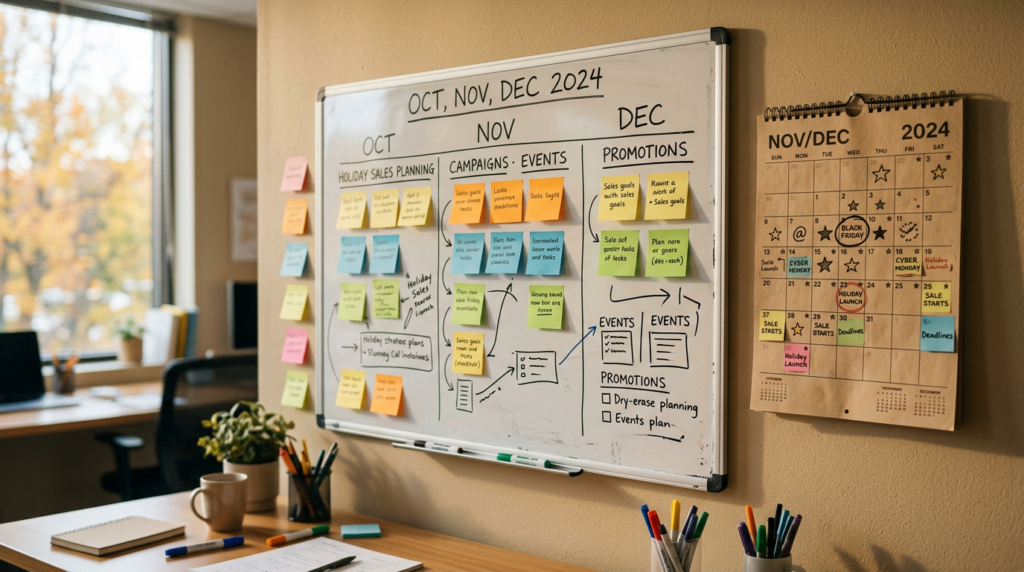
Seasonal Marketing Ideas for the Holidays
Good seasonal marketing ideas for the holidays do not need a big budget; they need an early start, one clear offer and a simple calendar. Most small businesses scramble in December, when customers are already overloaded. This guide shows you how to plan the season in October and November, what to promote each week, and how to measure results so next year is easier.
Key facts
- Start: plan 8 to 10 weeks before your busiest date
- Core pieces: one offer, one landing page, three emails, a handful of posts
- Best for: coaches, local services, product sellers and home-based businesses
- Measure: leads, bookings and sales per channel
Start With the Calendar, Not the Ideas
Open a blank calendar and mark the dates that matter for your customers, not just the famous ones: your own busiest weeks, school breaks, gift-buying deadlines, year-end budget deadlines for business clients, and the days you will be closed. Then count back. If your best sales weeks are in mid December, your teaser content should start in early November and your offer should be live before Thanksgiving.
Write down one goal for the season, such as 30 new leads, 15 booked sessions or a set number of gift sales. A single number keeps every idea honest, because you can ask whether each task moves it.
Pick One Offer People Understand in Five Seconds
The strongest holiday offers are simple: a gift card with a small bonus, a limited bundle, a year-end planning session, or a thank-you discount for past customers. Avoid stacking five promotions, which confuses buyers and trains them to wait for discounts.
Give the offer a real deadline and a real reason, such as limited appointment slots or a stock limit. If you use a discount, protect your margin by doing the math first: price, cost, and the lowest amount you can accept. Bundling a service with a bonus often protects margin better than cutting the price.
Build a Four-Week Content Plan
- Week 1: tell a story about why you do this work and tease what is coming
- Week 2: share useful tips tied to the season, such as a gift guide or year-end checklist
- Week 3: announce the offer with a clear deadline
- Week 4: send reminders and share customer results
Post three times a week on the one or two platforms where your buyers already spend time. Reuse one idea in several forms: a short video, a caption, a photo and an email. Our guide on repurposing blog posts into emails and posts shows how to stretch each piece.
Use Email and Text to Reach People Who Already Know You
Your existing list is your cheapest audience. Send three emails: an early heads-up, the main offer, and a last-chance reminder. Keep each short, with one button. If you collect phone numbers, text only people who gave clear written permission; the FCC explains that commercial texts generally require written consent. Include an easy unsubscribe in every email, as the FTC’s CAN-SPAM guidance requires.
Read our notes on email marketing tips for subject lines and sending cadence.
Add Local and Partner Ideas
Team up with a neighboring business for a joint gift bundle, host a small in-person or online event, or support a local cause and tell the story honestly. Update your Google Business Profile with holiday hours and a seasonal post so people searching nearby can find you. See small business marketing tips for more low-cost ways to stay visible.
If you run ads, keep tests small. Spend a modest amount on one audience and one message for a few days, and scale only what works, which we cover in our guide to testing ads cheaply.
Follow Up After the Season
The weeks after the holidays are when relationships pay off. Send a thank-you message, ask happy customers for a review, and invite buyers to join your list for early notice next year. Record what worked in a one-page summary: dates, offer, spend, leads and sales. Next year you will start from data rather than guesses.
A Simple Holiday Checklist
- Choose a goal and one offer
- Build one page that explains it
- Write three emails and twelve posts in one sitting
- Schedule everything two weeks ahead
- Prepare customer service answers for common questions
- Review results every Friday
Keep your tone warm rather than pushy. People respond to helpfulness and clarity in a busy season, and a calm, well-prepared small business stands out against noise.
A Worked Example for a Local Coach
Imagine a business coach with 40 past clients and an email list of 300. In early November she sends a short note announcing a year-end planning session with 12 slots. She posts three short videos about common planning mistakes, asks two past clients for permission to share their feedback, and sends a reminder one week before the deadline. Even if only a handful of list members book, the session pays for itself and produces testimonials for the next season. The pattern is the point: early notice, limited capacity, social proof, a clear deadline.
Product sellers can follow the same logic with a gift bundle and a shipping cutoff date. Put the cutoff in every message so buyers know when to order, and prepare packaging and customer replies before the rush rather than during it.
Common Seasonal Marketing Mistakes
Starting too late, offering too many deals, ignoring existing customers, forgetting to update opening hours and not tracking results are the most common errors. Another is copying large retailers’ deep discounts without their volume. Smaller businesses win on personal service, speed of reply and a story customers connect with. Protect your time as well: decide in advance how many orders or bookings you can fulfill so the busy season does not damage the reputation you worked hard to build.
Key Takeaways
- Plan 8 to 10 weeks ahead and work backward from your busiest dates.
- Use one clear offer with a real deadline.
- Reach your existing audience by email first, and text only with consent.
- Record results to make next year easier.
Frequently Asked Questions
When should I start holiday marketing?
Start planning about two months ahead and begin teasers four to six weeks before your key sales dates.
Do I need to discount?
No. Bundles, bonuses and gift cards often protect margin better than price cuts.
Which channel is best?
Email to your own list usually gives the cheapest return, followed by one social platform where your customers already are.
How do I measure success?
Track leads, bookings and sales by channel against the single goal you set at the start.
Sources
- U.S. Small Business Administration: Market your business
- FTC: CAN-SPAM Act compliance guide for business
- FCC: Stop unwanted robocalls and texts
- Google Business Profile Help
QastMe does not endorse any company. Information is for education only and is not financial or legal advice. Earnings in direct selling vary widely, and most participants earn little or no money. Review each company’s income disclosure statement before deciding.
Stay ahead of the industry. Get the latest network marketing news, company reviews, and lead-generation guides at QastMe.org.
Free: The 2026 Network Marketing Lead Playbook
30 ethical lead sources, a 7-day action plan, and the compliance rules that keep your business safe.
Want leads now? See QastMe lead options.