
Brownie Wise and the Tupperware Party: The Saleswoman Who Built Party Plan Selling
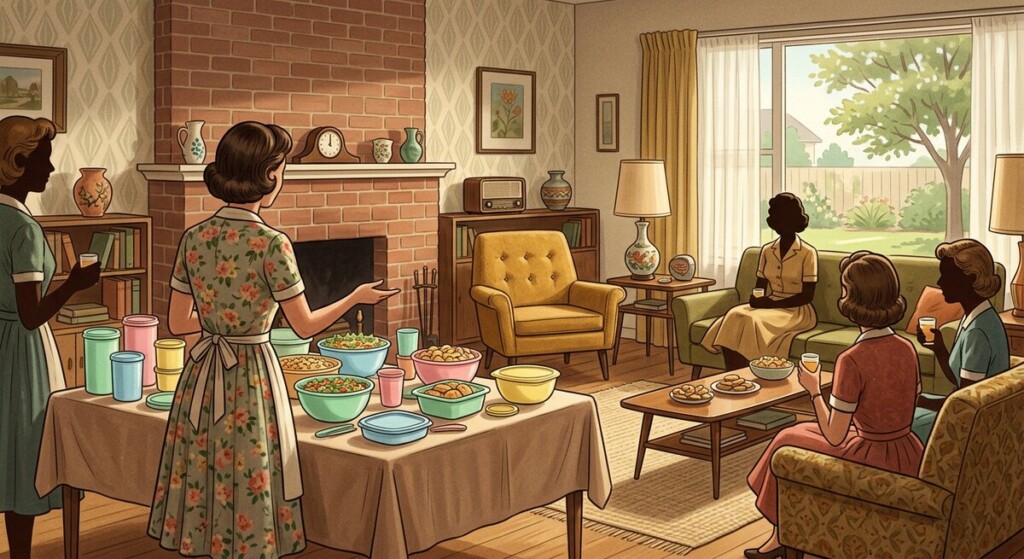
Brownie Wise and the Tupperware party are a big part of the reason “party plan” selling is still a household phrase. In the early 1950s, a divorced single mother from Detroit turned a plastic container that was failing in department stores into a national craze, simply by showing people how it worked in someone’s living room. This profile walks through her story, what she actually invented (and what she borrowed), how it ended, and what today’s direct sellers can learn from it without repeating its mistakes.
Key facts
- Who: Brownie Wise (born Brownie Mae Humphrey, May 25, 1913 – September 24, 1992)
- Role: Vice president of Tupperware Home Parties, 1951 to 1958
- Known for: Building Tupperware’s home party plan; first woman on the cover of BusinessWeek (1954)
- Sales force: Roughly 20,000 dealers, distributors and managers by 1954, all independent contractors
- Reality check: Most people in direct selling earn little or nothing; results vary widely
From Stanley Home Products to “Patio Parties”
Wise did not invent selling at home parties. According to the PBS American Experience profile, she started out selling Stanley Home Products, cleaning aids and brushes, at home demonstrations to earn extra income after her divorce. Stanley was an early direct selling pioneer, and Wise quickly became one of its strongest unit managers in the Detroit area.
She also ran into a wall. As her Wikipedia biography notes, citing historian Bob Kealing, Stanley’s founder Frank Beveridge reportedly told her management was “no place for a woman.” Around the same time she discovered Tupperware, a new polyethylene container that was selling poorly in stores because shoppers did not understand the airtight seal. Wise saw the fix: the product needed to be demonstrated. By 1949 she and her team had sold more than $150,000 of Tupperware, more than any store, and she was offered distribution rights in Florida, where she set up a company called Patio Parties.
How Wise built the Tupperware party plan
The Smithsonian’s guide to the Brownie Wise Papers explains that Wise in South Florida and Thomas Damigella in Massachusetts were among the fastest movers of Tupperware, and their results convinced Earl Tupper to sell through a home party plan. In 1951 Tupper hired Wise to run the new Tupperware Home Parties division. The National Women’s History Museum reports that Tupper then pulled the product out of stores and sold it only through parties, and that by 1954 the network had grown to roughly 20,000 dealers, distributors and managers, all private contractors.
What made her system work was not one trick but a set of habits that still look familiar today:
- Demonstration over description. Dealers showed the “burp” of the seal and even tossed containers across the room to prove durability.
- The hostess model. A host invited friends, the dealer ran the demonstration, and the host earned gifts, which turned social circles into the sales channel.
- Recognition at scale. Starting in 1954, Wise ran an annual sales conference called Jubilee. The 1954 event had a Wild West theme with a “Big Dig” where top sellers dug up prizes.
- Storytelling. Wise wrote for the company magazine and became the face of the brand; Smithsonian Magazine describes her as the marketer behind the Tupperware party. PBS recounts that a Manhattan PR firm told Tupper his company’s most marketable asset was its charismatic female executive.
If you want the mechanics of how party plan pay works today, our explainer on party plan compensation covers hostess rewards and consultant commissions in plain English.
The fall: fired in 1958
The same fame that sold Tupperware also strained Wise’s relationship with Tupper. Her 1957 autobiography, Best Wishes, Brownie Wise, and the media’s habit of crediting her for the company’s success deepened the rift. In January 1958, Tupper forced her out. She sued for $1.6 million for breach of contract and settled for $30,000. She owned no stock, and many of her possessions, including her Florida house, were company property. Later that year Tupper sold the company to Rexall for $16 million.
Wise tried to repeat her success. She founded a party plan cosmetics company, Cinderella International, which closed within a year, and later led Viviane Woodard Cosmetics, without matching her Tupperware results. She worked as a consultant and in real estate, and died in Kissimmee, Florida, in 1992. In 2016, Tupperware donated $200,000 toward a conservation area and Brownie Wise Park in Osceola County.
Where Tupperware’s story ended up
The party plan Wise built carried Tupperware for decades, but the company itself did not last in its old form. On September 17, 2024, Tupperware Brands filed for Chapter 11 bankruptcy, according to its SEC filing. A group of its secured lenders, through Party Products LLC, bought the brand name and operations in core markets, a sale that closed on November 27, 2024. The lesson is not that home parties stopped working; it is that no sales channel saves a business from heavy debt and changing customer habits.
Lessons for direct sellers today, step by step
Wise’s story is useful because it shows both the strengths of relationship selling and its risks. Here is how to apply it responsibly:
- Lead with a product that needs showing. Tupperware worked at parties because the seal had to be seen. Ask whether your product genuinely benefits from a demo, or whether you are relying on friendship to move it.
- Treat hosts as customers first. The hostess model works when guests leave with something they wanted. Keep the focus on retail customers, not on recruiting every guest.
- Recognize effort, not hype. Recognition events built loyalty in the 1950s. Today, celebrate customer service and consistency rather than lifestyle displays that imply income.
- Own your position. Wise had no equity and lost almost everything when she was fired. Independent contractors today should read their agreement, understand what they control, and keep their own records.
- Keep claims honest. The FTC says earnings claims must be truthful and typical. Read the FTC’s business guidance on multi-level marketing before you post about results.
Income reality and compliance
Founder and leader stories are inspiring, but they are not typical. Most participants in direct selling and MLM earn little or nothing, and many spend more than they make; results vary widely based on time, market, product and plan. Before joining any company, read its income disclosure statement and compare it with independent research, such as our summary of MLM success rate statistics. Nothing in this article is financial or legal advice.
Frequently Asked Questions
Did Brownie Wise invent the home party?
No. Stanley Home Products and others used home demonstrations first. Wise refined the model, built Tupperware’s sales force around it, and made it famous.
Was Brownie Wise a founder of Tupperware?
No. Earl Tupper founded the company and invented the seal. Wise was vice president of Tupperware Home Parties from 1951 to 1958.
Why was she fired?
Accounts point to growing friction with Tupper over her public profile and credit for the company’s success. He forced her out in January 1958.
Is the party plan still used?
Yes. Many direct sellers still use hostess-based parties, now often online. Compare any plan’s costs and income disclosure before joining.
Can I expect to earn like a top leader?
No. Leader stories are exceptions. Most participants earn little or nothing, and results vary.
Conclusion
Brownie Wise proved that a product nobody understood on a store shelf could sell itself in a living room, and she built a national sales force at a time when women were shut out of management. Her story is also a warning about owning nothing in a business you built. For more founder history, see our profiles of Mary Kay Ash and the founders who built direct selling.
Building something of your own from home? The Mobile Startup Playbook walks through launching and running a small business from your phone.