Using Google Maps to Find Local Business Leads
Using Google Maps to find local business leads is a free, fast way to build a targeted prospect list for service providers, agencies, coaches and anyone selling to local companies. Maps shows you who operates in a niche, how they present themselves and how to contact them. This step-by-step guide shows how to search, qualify and reach out ethically, without breaking any rules.
Key facts
- Search: category plus city, such as dentists in your town
- Qualify: check reviews, photos, website and hours for gaps you can help with
- Record: note the business, contact method and the specific gap
- Reach out: personal, useful and compliant with email and call rules
- Limit: follow Google’s terms; do not scrape the site
Why Google Maps Is a Lead Goldmine
Every local business that wants customers appears on Google Maps with a name, address, phone number and usually a website, along with reviews and photos that show how well it is run. For a freelancer or consultant selling to local companies, that is a ready-made prospect directory sorted by location and category. Because you can see the business’s weak spots, such as few reviews, outdated photos or no website, you can open a conversation with something specific to offer.
This works for coaches selling to local professionals, designers, web builders, bookkeepers, cleaners selling to offices and many more. If you want other free methods, see how to get 100 leads a month without paid ads.
Step 1: Search by Category and Place
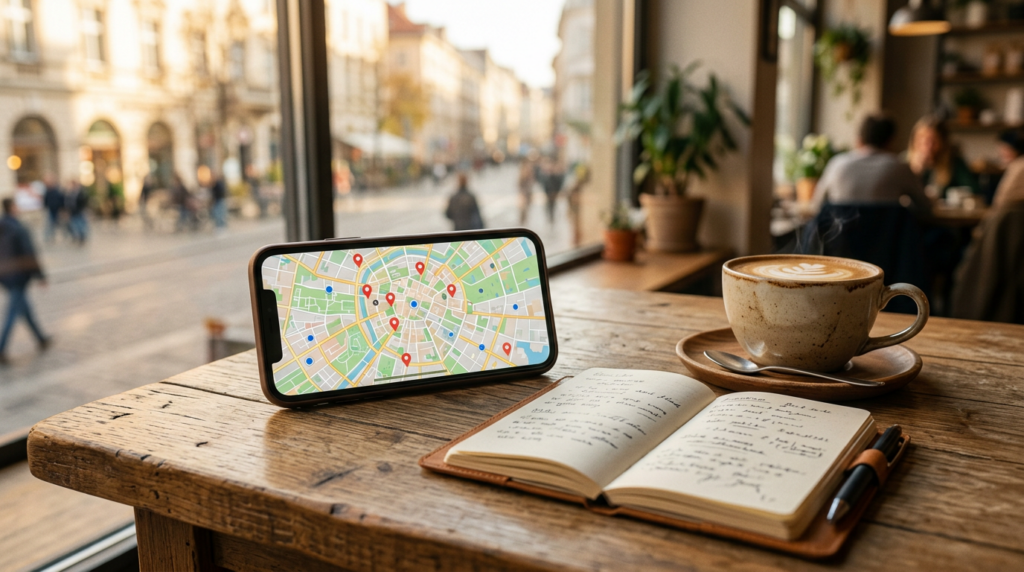
Open Google Maps and type a category and location, such as plumbers in Tulsa or yoga studios near Denver. Zoom and pan to cover a neighborhood or suburb. Use the filters for rating and hours. Try several wording variations, since businesses are listed under different categories. Open each business and read its profile: categories, services, hours, photos, reviews, website link and phone number.
Pick one niche and one area at a time. A narrow list of 30 well-researched prospects beats 300 names you know nothing about.
Step 2: Qualify Before You Contact
Look for signs the business could use your help and can afford it. Useful signals include a decent number of reviews but a low average rating, no replies to reviews, few or poor photos, missing hours, no website or an outdated one, and no booking link. Equally important are signs that they are active: recent reviews and posts. Avoid contacting businesses that clearly are not a fit, such as a chain with a corporate marketing team.
Our five-question approach in how to qualify a lead in five minutes adapts well to this kind of list.
Step 3: Record What You Find
Use a simple spreadsheet or a free CRM with columns for business name, category, address, phone, website, the gap you noticed, the date contacted and the outcome. Add the owner’s name if it is visible on the website or in public listings. Save the Maps link for each business. Keep personal details to what is publicly available and relevant to business contact, and respect privacy laws in your region.
Do not scrape or mass-export Google Maps data with automated tools. Google’s terms of service restrict that, so build your list by hand or use Google’s official products and licensed data providers.
Step 4: Reach Out With Something Useful
A good first message names the business, mentions one specific thing you noticed and offers a small, free next step. For example: I noticed your studio has strong reviews but no online booking link. I made a short list of three ways similar studios add one in an afternoon. Would it help if I sent it over?
Phone calls and visits can work well for local businesses, but check your local telemarketing rules and do-not-call lists. For email, follow the FTC’s CAN-SPAM requirements: accurate sender details, a physical address and a working opt-out. Our guide to cold email that gets replies shows how to write a short, respectful message.
Step 5: Follow Up and Track
Most replies come after a second or third touch. Plan three contacts over two to three weeks, each adding value rather than repeating yourself. Stop when someone says no. Track how many contacts turn into conversations and how many conversations turn into customers, and refine your niche and message from the numbers. Read follow-up systems for a ready-made sequence.
Use Maps for More Than Lead Lists
The same search shows your competitors and their review counts, so it doubles as market research. It also suggests partner opportunities: businesses that serve the same customers without competing, such as a wedding florist and a photographer. Building those relationships can bring referrals for years, which is where this guide meets networking.
Three Niches to Try First
Good starting niches for local prospecting are businesses with visible gaps and a clear need for outside help: dental and chiropractic practices that rely on reviews, home service companies such as roofers and landscapers that depend on local search, and gyms and studios that need bookings. Pick one, build a list of 30 and contact ten a week. After a month you will know which message works and whether the niche is worth your time.
Key Takeaways
- Search by niche and area and read each profile.
- Qualify on visible gaps and activity.
- Record leads in a simple sheet.
- Reach out with a specific, useful message that follows the rules.
- Follow up two or three times, then move on.
Frequently Asked Questions
Is it allowed to use Google Maps to find leads?
Browsing Maps by hand to research businesses is fine. Automated scraping can breach Google’s terms, so avoid it.
How many leads should I list?
Start with 20 to 30 well-qualified businesses in one niche and area.
Should I call, email or visit?
Choose the channel that suits the business and local rules; many service businesses respond well to a short call or message.
Can I use this for network marketing?
Maps is better for finding local business partners and customers. Be careful with any income claims in outreach.
Sources
- Google Business Profile Help: Tips to improve your local ranking
- FTC: CAN-SPAM Act, A Compliance Guide for Business
QastMe does not endorse any company. Information is for education only and is not financial or legal advice. Earnings in direct selling vary widely, and most participants earn little or no money. Review each company’s income disclosure statement before deciding.
Stay ahead of the industry. Get the latest network marketing news, company reviews, and lead-generation guides at QastMe.org.
Want customers to find you on Google and in AI search? Chris Cartmill’s Geo SEO services help independent and local businesses rank in “near me” and AI answers. Learn more at chrismcartmill.com.
Free: The 2026 Network Marketing Lead Playbook
30 ethical lead sources, a 7-day action plan, and the compliance rules that keep your business safe.
Want leads now? See QastMe lead options.